Product Overview
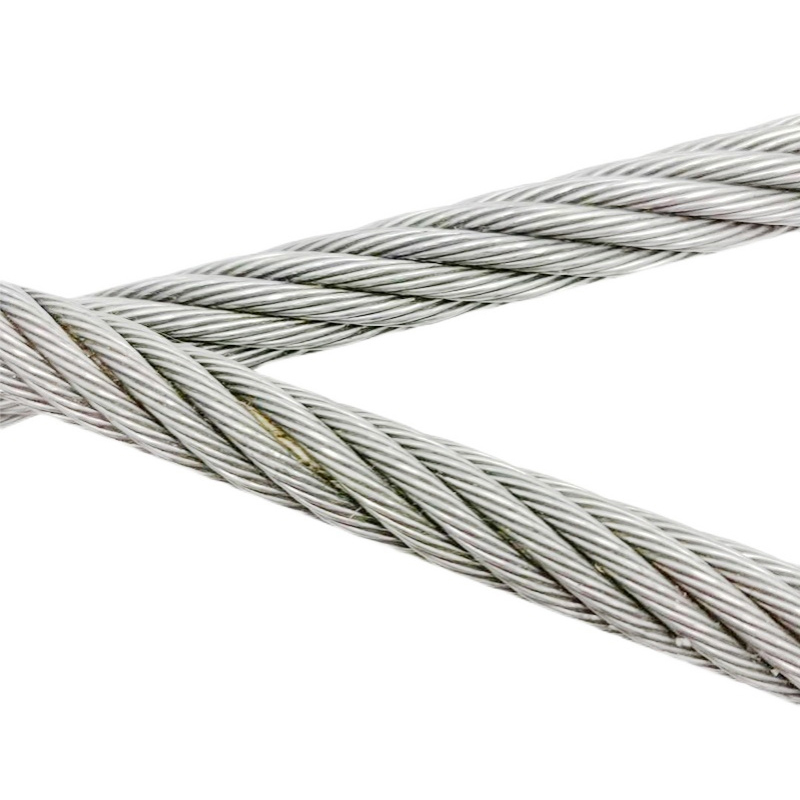
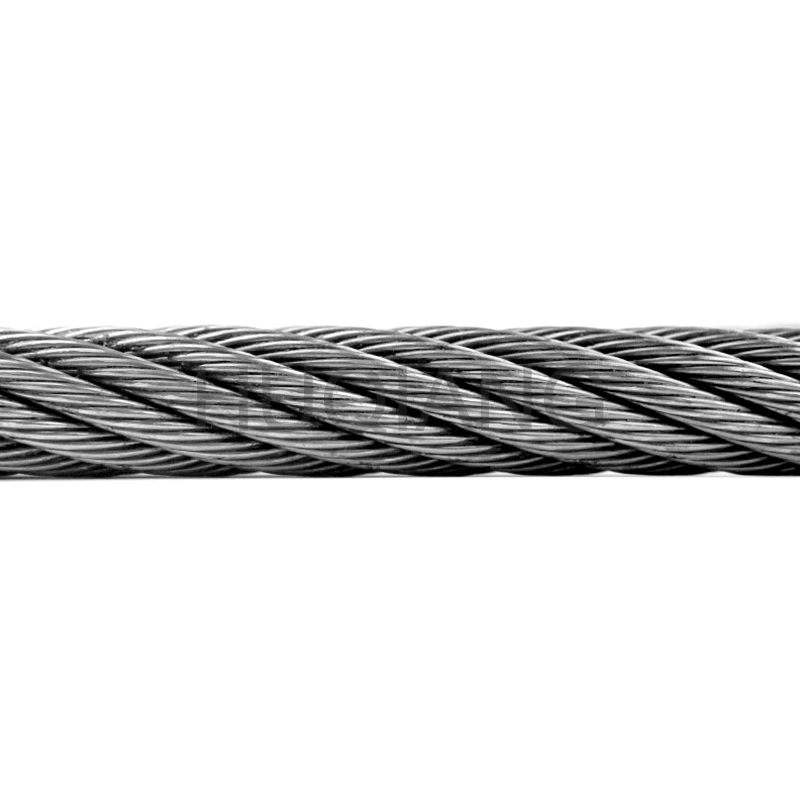
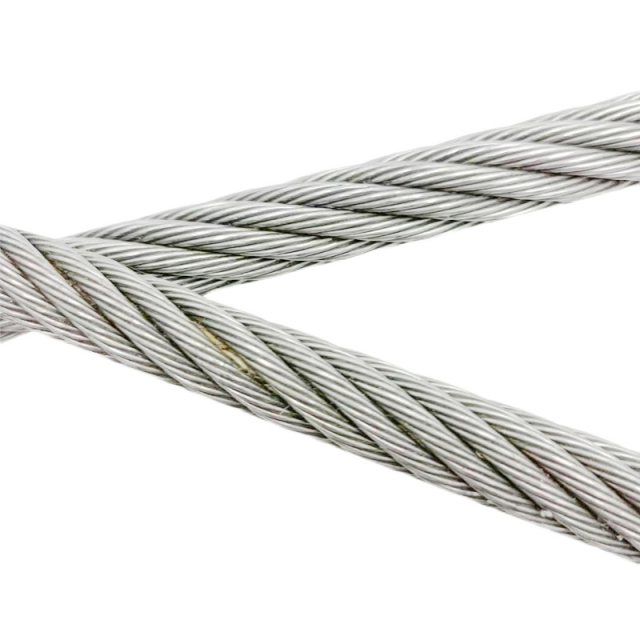
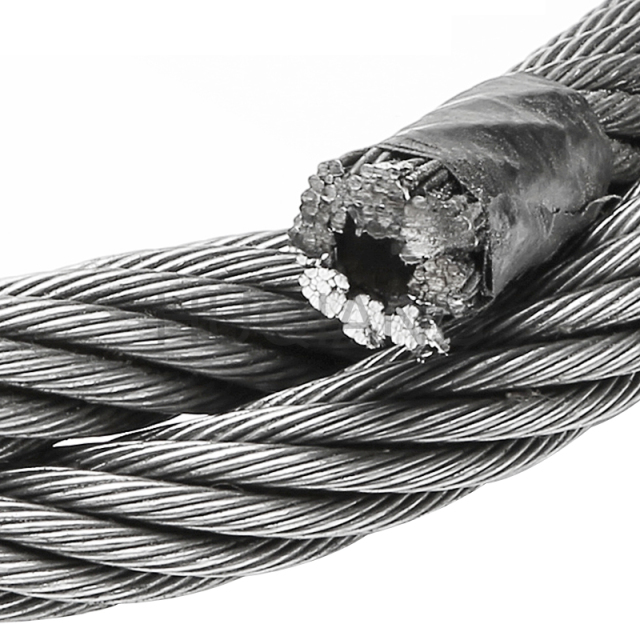
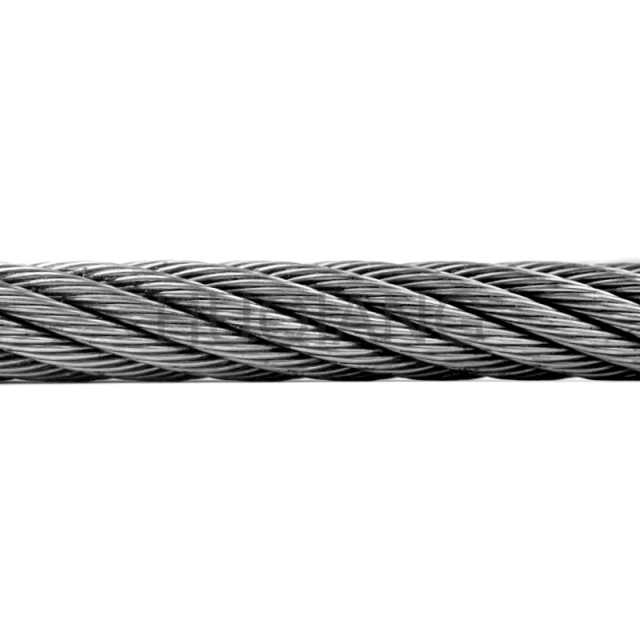
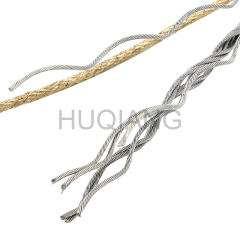
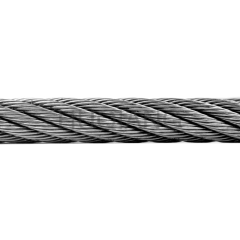
This is the steel wire rope that runs between the door operator and the door panels on a passenger or goods lift. It is a braided, multi-strand elevator door wire rope with a bright metallic finish, supplied in six diameters and cut to the metre length you ask for, so a hall door and a car door on the same job can go out in one order.
The range is referenced for Hitachi, Otis, Thyssen and Mitsubishi door assemblies. Because it is sold by the metre rather than by the coil, an elevator parts supplier ordering for a retrofit and a one-van service company ordering two lengths buy it the same way: diameter, length, core, and the door it goes on.
Most of these ropes leave us as elevator replacement parts for a planned door service rather than as an emergency purchase. The technician measures the rope coming off, checks the core, and reorders the same specification — which is why keeping the six diameters and three cores on the shelf beats ordering one at a time.
Give us the diameter and the total metres when you order and we will confirm the shipping weight before it is packed.
- Six diameters on one order. The six sizes cover the door operators we see most often, so a mixed order across two or three of them does not mean two or three suppliers. - Three core constructions. Hemp core, semi-steel and full steel are three distinct constructions, which lets the same diameter be matched to a light hall door or to a heavier car door rope instead of forcing one construction everywhere. - Cut to the metre. An elevator door wire rope ordered for one door arrives as one finished length rather than a coil you have to cut, whip and store; give the run length and the rope is cut to it. - Referenced for four door brands. The range is referenced for Hitachi, Otis, Thyssen and Mitsubishi door assemblies, so a company that already handles Otis elevator parts can cover the door side of the same job instead of opening a second account. - Tension that holds. The twisted multi-strand construction keeps tension control consistent as the door cycles, so the panels track evenly and the rope is less likely to slip or ride up on the sheave. - A stock item, not a breakdown purchase. Service companies and elevator spare parts manufacturers keep the fast-moving diameters on the shelf and re-rope during a planned service, which keeps a worn hall door rope from turning into an out-of-hours call-out.
Specifications
| Feature | Brand new, original |
|---|
| Brand Name | Other |
| Type | Elevator Parts |
| Product Name | Elevator Wire Rope |
| Model Number | 6 8 12 13 16 10mm |
| Construction | Braided multi-strand steel wire rope |
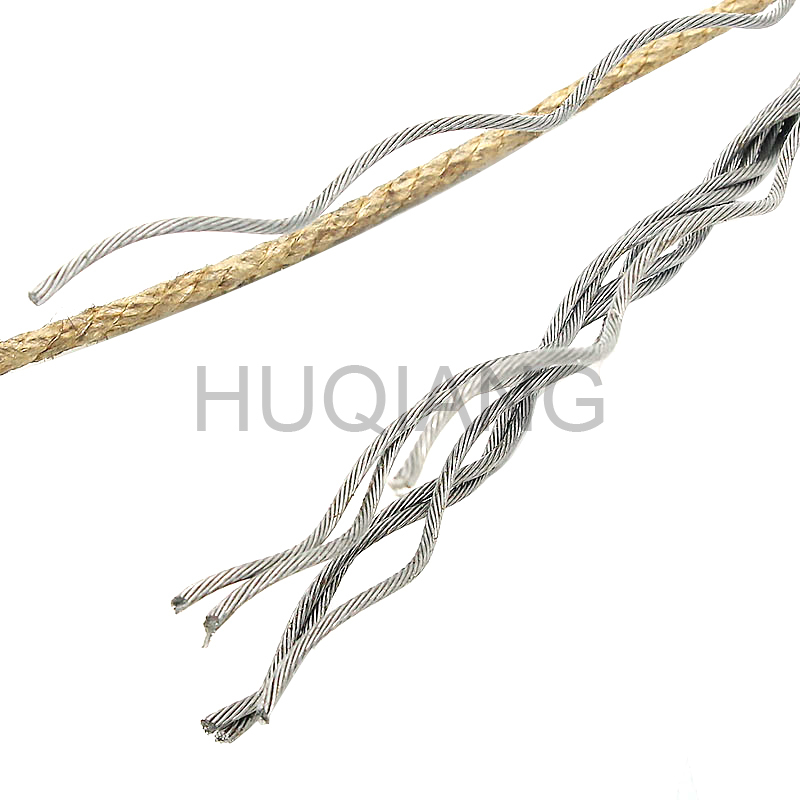
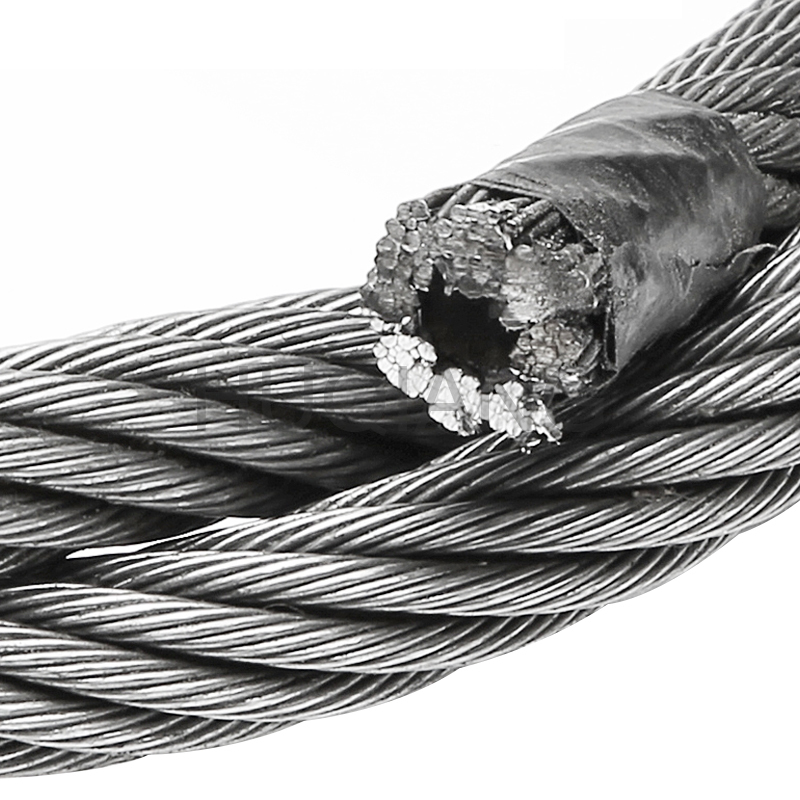
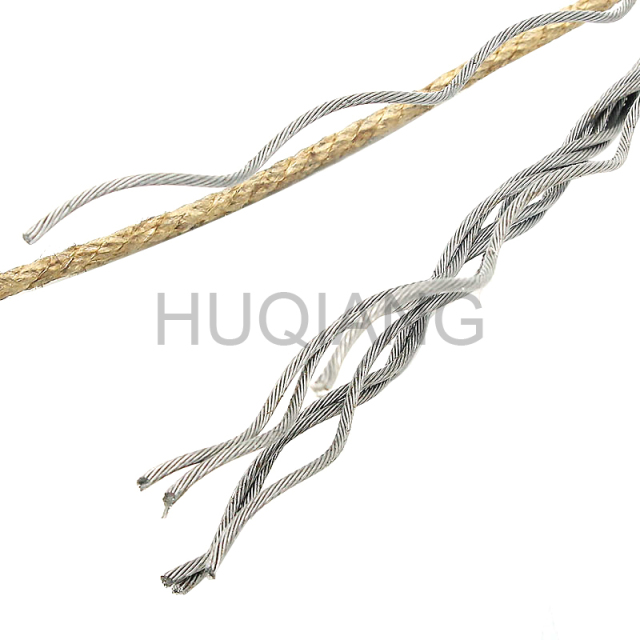
| Core options | Hemp core, semi-steel, full steel |
| Diameter range | 6 mm, 8 mm, 10 mm, 12 mm, 13 mm, 16 mm |
| Supply form | Cut to length in metres |
| Door position | Hall door and car door |
| Brand reference | Hitachi, Otis, Thyssen, Mitsubishi |
| Payment Terms | T/T, L/C, VISA, Mastercard, E-checking, Paypal |
| Delivery | 1-3 Working Days |
| Warranty Time | One Year |
| Transportation | DHL/TNT/FEDEX/UPS |
| MOQ | 1PC |
Diameter Selection
- Start from the rope you are taking off. The most reliable reference is the old rope itself: read the diameter from its marking, or measure across the body of the rope with a caliper, and measure the run end to end with the old rope laid flat.
- Six sizes cover the range. The full list sits in the specifications above; a van carrying two or three of them covers most call-outs, and a mixed order across sizes is packed together.
- Small and large in practice. Lighter hall door operators generally run the smaller diameters and heavier car doors the larger ones, so a hall door rope usually comes out at the small end of the range; when the old rope is still on the door, it settles the question faster than any table.
- Length is cut, not chosen from a list. These are elevator replacement parts made to measure: send the run length in metres and the rope is cut to it, so an odd-sized door is not a problem.
- Weight follows the specification. A large-diameter elevator wire rope and a small one do not weigh the same over the same run length.
- Two ropes on one door. Where a door runs a pair, order both cut to the same length so the tension stays even — as an elevator parts supplier we cut pairs together where the stock allows.
Core Construction Options
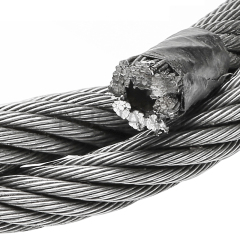
Three constructions cover the range. Hemp core is the most flexible of the three and is the traditional choice for lighter door duties — typically a hall door rope; full steel is the firmest and holds its shape under a heavier load; semi-steel sits between the two. Service companies and elevator parts manufacturers usually specify the core by what the door does rather than by price, and the marking on the old rope is the quickest guide if it still carries one.
The core changes how the rope behaves over the sheave. Too stiff for the bend radius the door asks for and it fatigues faster; too soft for a car door rope driving a heavy panel and it stretches and needs re-tensioning sooner. This is the sort of question an elevator spare parts manufacturer can answer from the door drawing, while from us a photo of the old rope and the door type is usually enough to point you the right way.
If the door has been re-roped before and the rope on it is clearly not the original, say so when you order. Matching what is fitted now and matching what the door was built with can give two different answers, and it is better to settle that before the rope is cut to length.
Where These Ropes Are Used
Modernisation and retrofit work is where the range earns its keep. Replacing obsolete hall and car door cables on a commercial building usually means several door types in one shaft, and an elevator parts supplier quoting that job needs the rope in more than one diameter and more than one length to cover them. Cutting to length means the retrofit does not sit waiting on a coil to arrive.
High-traffic buildings — hospitals, transit hubs and shopping centres — are the other main use. Here the rope is replaced on a schedule rather than at failure, because a dragging door costs more in lost access than a car door rope costs to change. Sites that already hold Otis elevator parts in their stores often put the door rope on the same list, so one store visit covers the door and the operator together.
For a distributor, the practical value is breadth. An order for Otis elevator spare parts can pick up the door ropes on the same dispatch, so the van is restocked in one delivery instead of three, and the fast-moving diameters stay available without a separate rope supplier.
Installation & Tensioning
- Park the car at a landing, switch the controller off and lock it out before the door is touched; a door rope is replaced with the operator dead, not jogging.
- Photograph the routing before anything comes off — how the rope passes the sheave, where the tensioner sits, and how many turns it makes.
- Take the old rope off and lay it flat; measure it end to end and confirm the diameter and core against what you ordered.
- Fit the new rope along the same route, keeping the cut ends from unlaying as you feed it through; tape the ends if the run is long.
- Tension to the door's own setting, then open and close the door by hand and check that the panels meet squarely and the rope sits in the groove rather than on the flange.
- Run the door through several full cycles under power, re-check the tension and the closed position, and look again after the first few days of service — new rope beds in and takes up a little.
Ordering & Delivery
- Minimum order. One piece. A single rope for one door is a normal order, and mixed diameters are packed together.
- Cut lists and repeat orders. A distributor's mixed list or an elevator spare parts manufacturer's cut list is cut and packed the same way; tell us the reference and we will cut the same lengths again.
- What to send with the order. The diameter, the run length in metres, the core type, and whether the door is a hall door or a car door. If the building's Otis elevator spare parts file already lists the original rope, quote that reference.
- Payment. T/T, L/C, VISA, Mastercard, E-checking, Paypal.
- Delivery. In-stock items leave in 1-3 working days by DHL/TNT/FEDEX/UPS.
- Packing. Carton or wooden case, depending on the lengths and how many ropes are on the order.
- Warranty. One year.
- Freight weight. Different specifications have different weights, so we confirm the packed weight for your lengths before the courier is booked.
Technical Support & Model Matching
Choosing the right variant is the hardest part of a replacement order, so our technical team starts from what you already have: a nameplate photo, the markings on the old part, or the part number exactly as it appears in your manual. We match it against the brands and series we supply, point out the suffixes and revisions that will not interchange, and confirm by email before dispatch. After delivery our team stays reachable for fault-finding and practical guidance on fitting the part you ordered. Every item we ship carries a one-year warranty.
FAQ
Which core types are available for these elevator wire ropes?
Three: hemp core, semi-steel and full steel. Which of the three suits a particular door comes down to what the door does, and the Core Construction Options section above sets out how they differ. Tell us the door type and what it carries and we will point you to the construction that matches; if the old rope still has a marking on it, quote that and we will work from it.
Can the ropes be cut to the length I need, and which diameters are available?
Yes. Every elevator door wire rope is cut to metre lengths against your measurement, so a non-standard run is not a problem. The diameters are 6, 8, 10, 12, 13 and 16 mm, and one order can carry several diameters at different lengths. Send the run length end to end plus the diameter, and we cut and pack from there.
How do I know a rope will fit a Hitachi, Otis, Thyssen or Mitsubishi door?
The range is referenced for those four door assemblies, and fitment comes down to diameter, run length and core construction. Most buyers match against the rope coming off rather than against a catalogue. The ropes arrive with cut ends, and whether you reuse the clamps already on the door or fit new ones is settled on site. If the building's Otis elevator parts file lists the original rope, send that reference together with a photo of the old rope and we will confirm before dispatch.
How should I measure the rope I am replacing?
Measure across the body of the rope with a caliper rather than estimating from the sheave, and measure the old rope end to end after laying it flat, because a rope still under tension reads short. Note the core type if the rope is marked, and note whether it is a hall door or a car door. Those details are enough to place an elevator replacement parts order with confidence the first time.
Do the same ropes cover hall doors and car doors?
Yes, both positions use the same six diameters and the same three core constructions. What changes is the length of the run and the load the operator puts on the rope, with hall doors generally the lighter duty and car doors the heavier. If a building's Otis elevator spare parts list is mostly door-side, the door rope is worth adding to that list rather than ordering it separately when a door starts dragging.
How is the rope constructed?
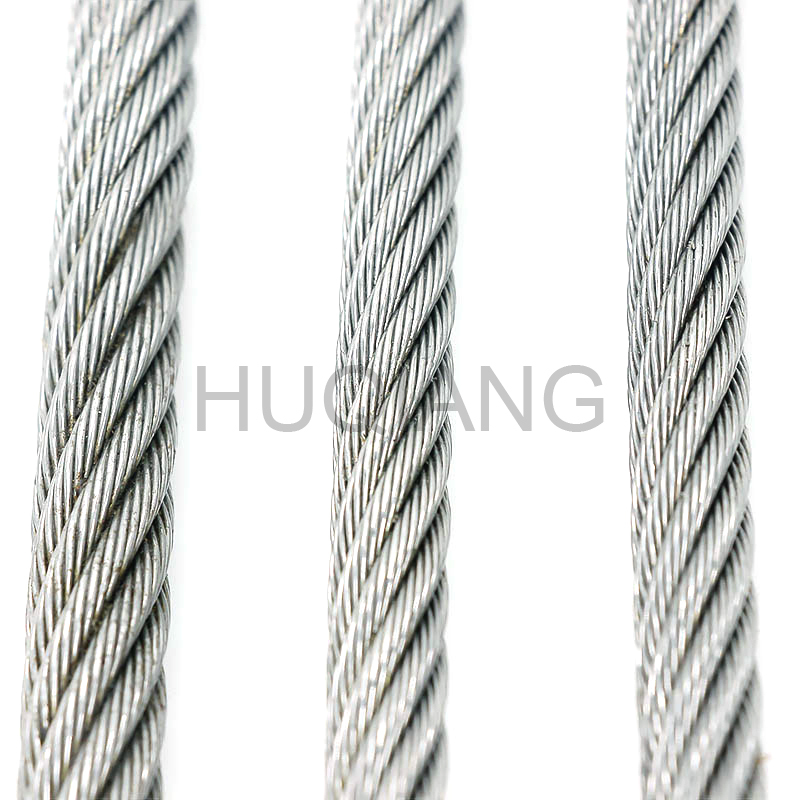
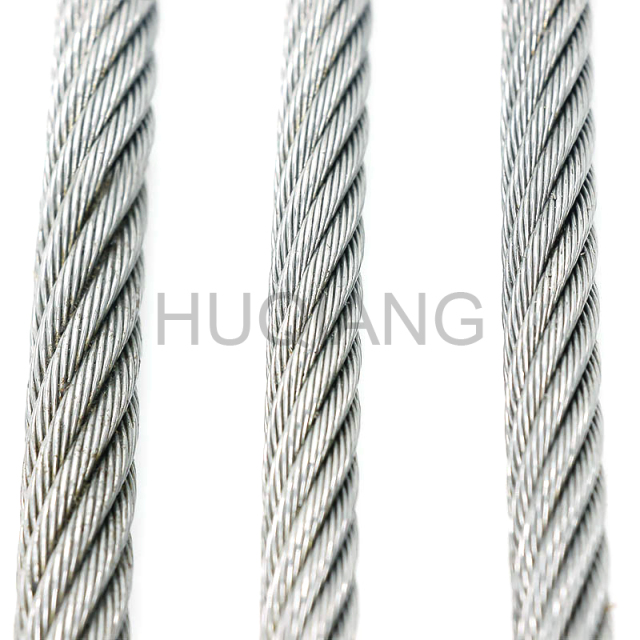
It is a braided, multi-strand steel wire rope with a twisted lay and a bright metallic finish. Matching the lay and the strand count is why the rope is ordered by diameter and core rather than by appearance. Tape or clamp the ends as you feed the rope through so the strands do not unlay before the fittings are back on.