Product Overview
An elevator encoder is the part that tells the lift controller how fast the traction machine is turning and where the car actually is. The HEIDENHAIN ERN1387 204862S14-70 does that job: a central shaft turns with the machine, the scanning system inside the housing converts that rotation into a pulse train, and the controller reads the train to hold speed, count floors and stop the car level with the landing. When the signal starts to break up, the first symptoms are rough starts, overshoot at the floor and levelling faults that come and go between service visits.
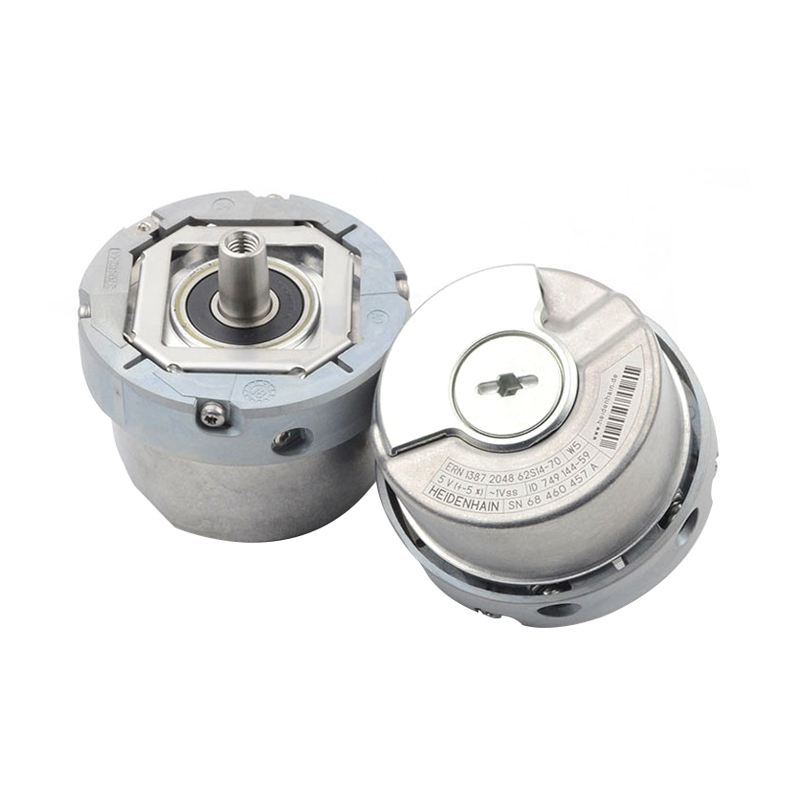
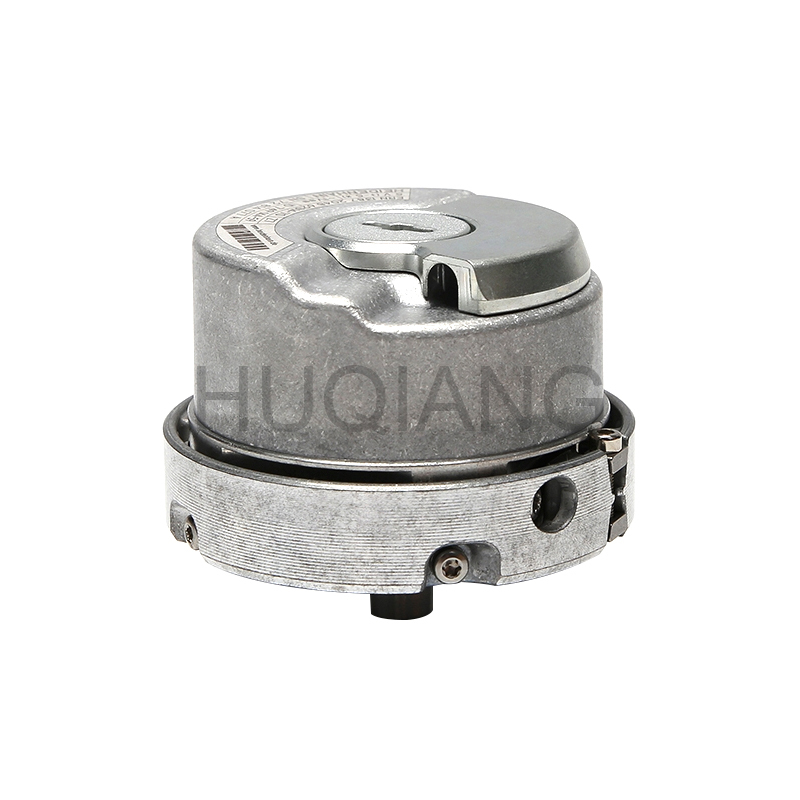
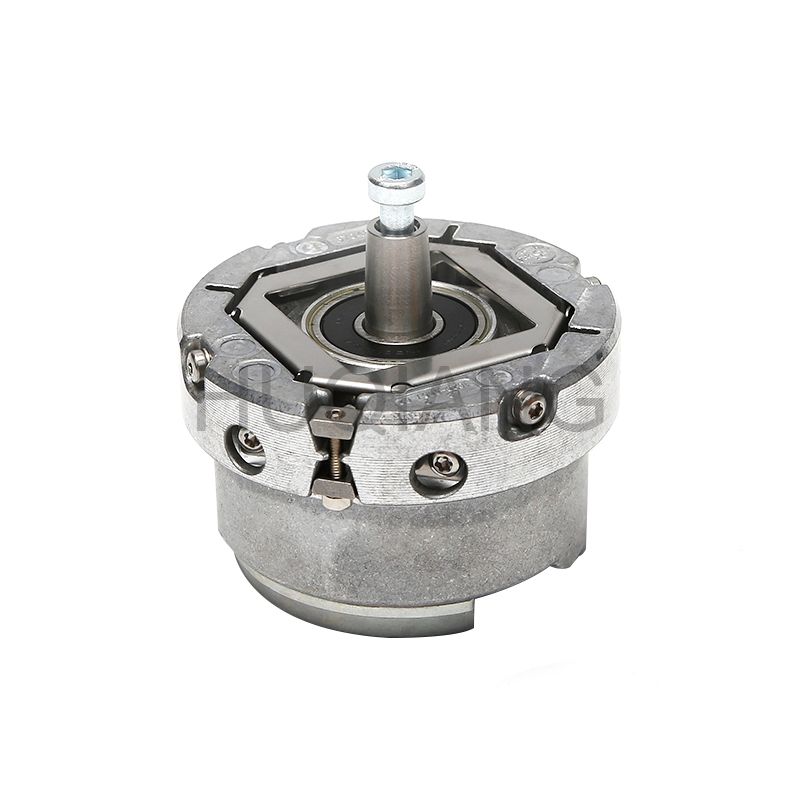
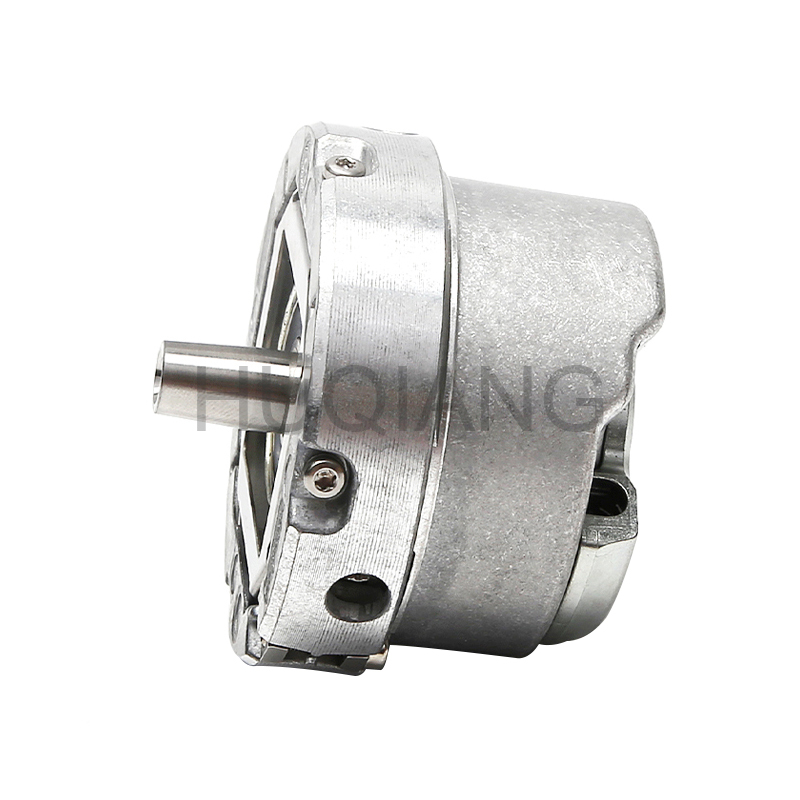
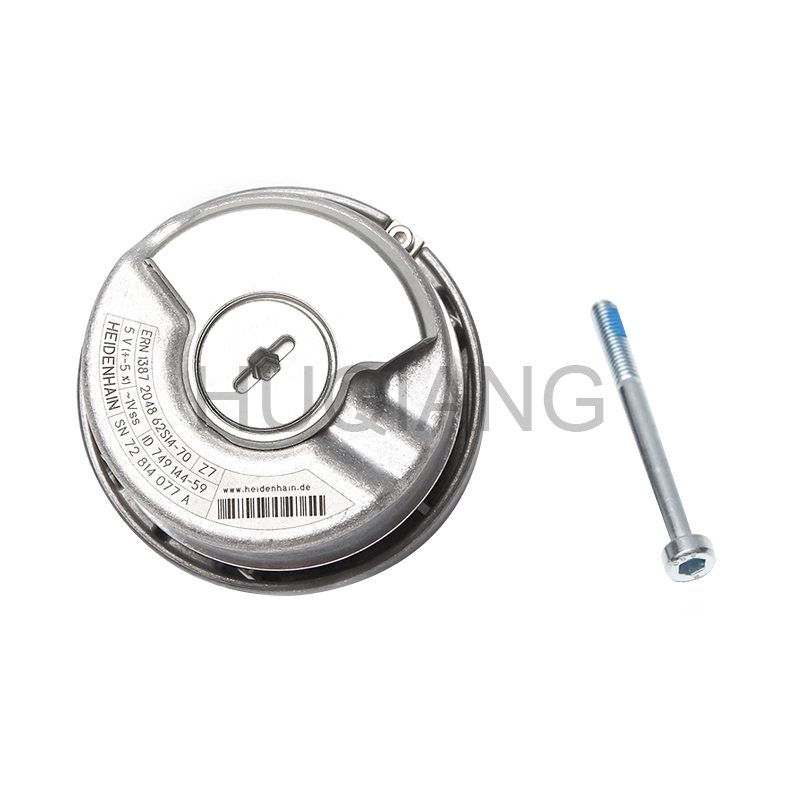
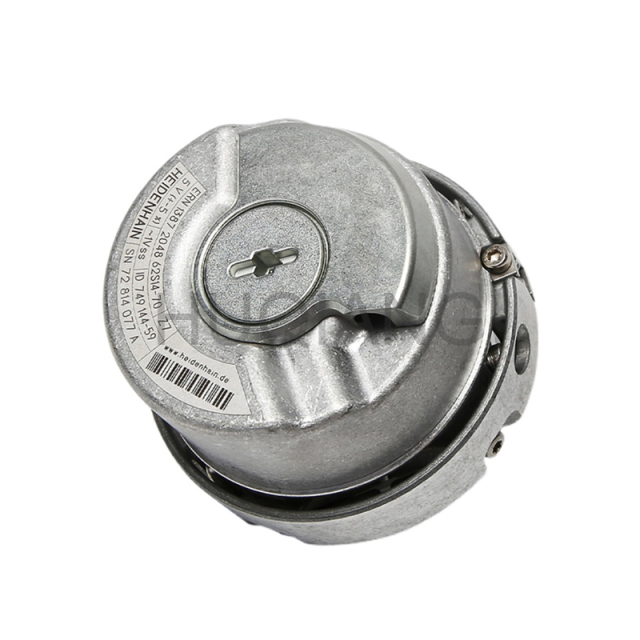
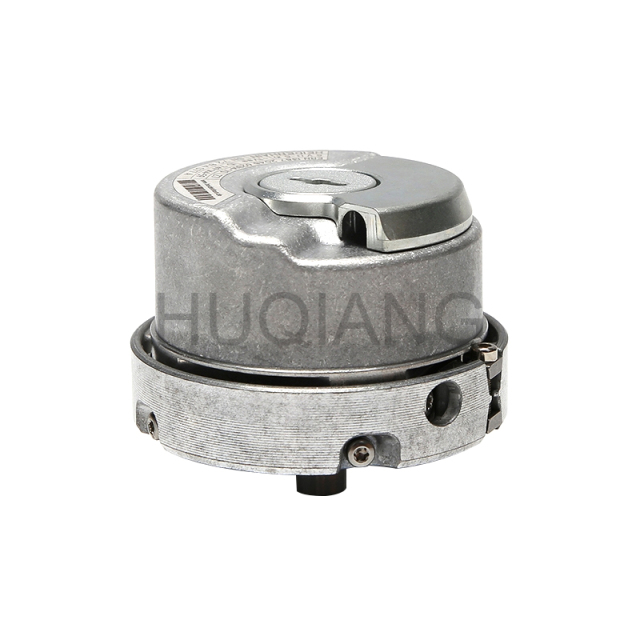
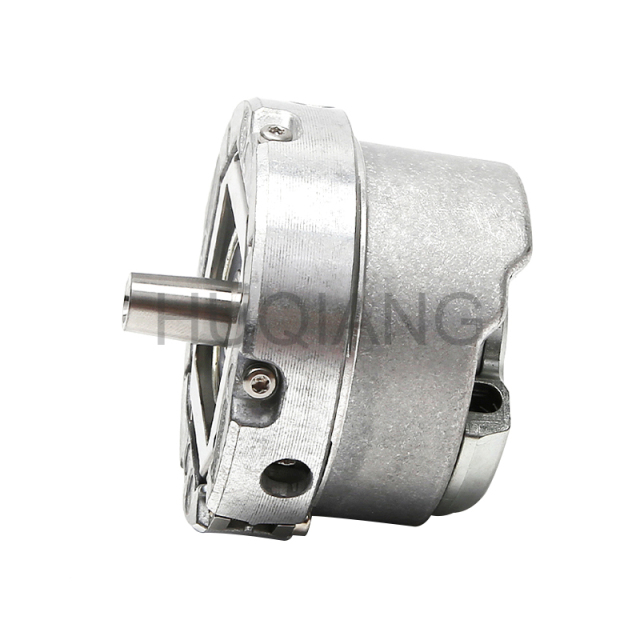
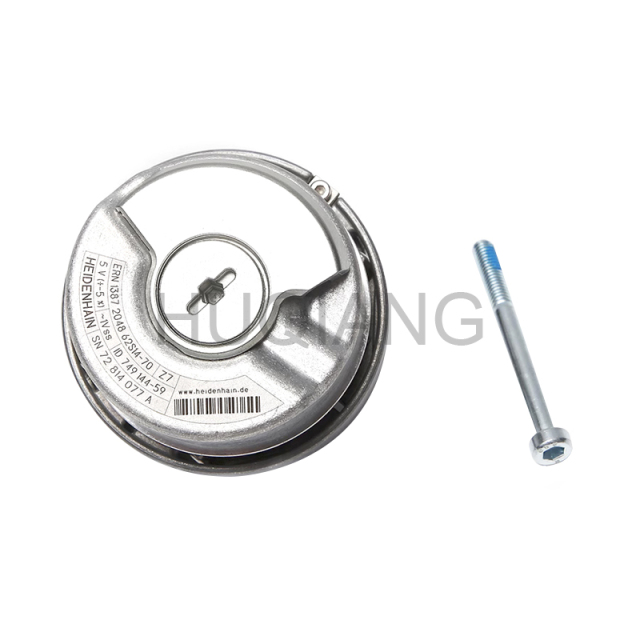
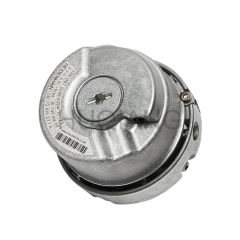
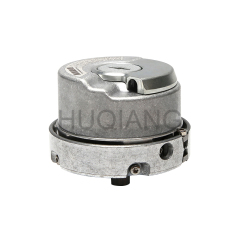
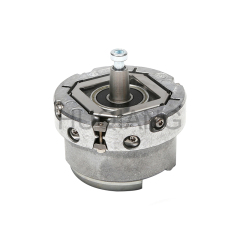
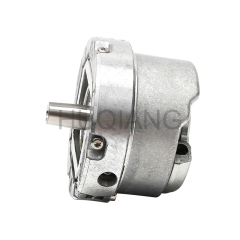
This is a new and original HEIDENHAIN unit rather than a rebuilt or re-labelled one, and it is the direct replacement for a machine that already carries the same encoder code. The body is a sealed metal housing with a machined flange, a central shaft and a stator coupling ring, so it fixes to the machine the way the original did — no adapter plate, no change to the feedback wiring.
Buyers differ, the job does not. A maintenance contractor keeps one on the shelf for a breakdown call, a distributor stocks it against the ERN 1387 series, and an elevator parts manufacturer fitting out new cars specifies the same code at build. All three are working from the printed label on the old unit, and all three need the replacement on site in days rather than weeks.
If you are weighing this against a cheaper copy, the difference sits in the parts a photograph cannot show: the scanning electronics inside the housing and the grade of the bearings that carry the shaft. Those decide whether the signal is still clean after a year of rotation.
- Fine position steps for smoother levelling. A high pulse count per revolution hands the controller small increments to work with, so the car eases into the landing instead of hunting around it and the ride settles at every floor. - Sealed against a working machine room. The housing is closed to dust and splash, which is what a plant room with ventilation grilles, oil mist and the occasional washdown actually throws at a device bolted to the traction machine. An elevator machine encoder that lets grit in starts dropping pulses long before it fails outright. - Stable output as the room heats up. The rated band covers a cold plant room in winter and a hot machine room in summer, so the pulse stream stays steady through the day instead of drifting as the enclosure warms. - The coupling takes up small alignment errors. The stator coupling ring absorbs minor shaft and bracket tolerances during fitting, which shortens the time a technician spends on site and reduces the chance of a shaft being forced off-centre on a rushed job. - Same mounting, same connector. Bolt pattern, shaft and plug follow the original HEIDENHAIN layout, so a swap stays a swap and does not turn into a bracket-making exercise. - Ordered by code rather than by guesswork. The unit is specified across the trade — lift builders, retrofit houses and an elevator spare parts manufacturer all buy it under the same number — so the controller parameters and the mechanical fit are usually settled before the parcel arrives.
Reading the Part Number
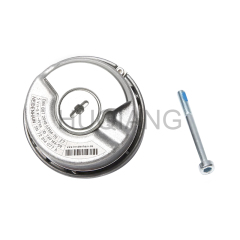
- A HEIDENHAIN elevator encoder 1387 label carries two identifiers, and both matter. The first is the model code: ERN 1387, then the pulse figure, then a suffix that describes the shaft and coupling variant — 62S14-70 on this unit. The second is the ID number printed on the line below, which pins down the exact variant rather than the family.
- In practice, a photograph of the old label is worth more than any description in an email. Read the code and the ID exactly as printed, note the serial on the flange as well, and send them through. Two encoders that look identical from the outside can differ in the suffix — coupling style, shaft end, connector — and a suffix that does not match is the usual reason a replacement will not seat.
- Write the numbers down before the old unit comes off the machine. While it is still bolted up the label is easy to read; once it is on a bench under a pile of brackets, it is not. The model code is also how our stock is indexed, so quoting it as printed is the quickest route to a confirmed answer rather than a maybe.
- If the traction machine currently carries an ERN 1313, do not assume a straight swap. That number sits next to this unit because both turn up on the same lift packages, but they are different series: the stator coupling, the shaft end, the connector and the pulse count the drive is expecting can all differ from the ERN 1387. Send the code and ID from the old label together with the machine and controller model, and we will tell you whether this elevator encoder is the correct exchange or whether the 1313 side is what you actually need.
- Look at how the old unit is held before you order. Some encoders screw directly into the traction machine housing, others into a separate bracket, and the coupling ring has to sit flat either way. An elevator machine encoder bought with the wrong coupling will bolt up and still run off-centre.
- Check the plug on the feedback cable, not only the socket on the encoder. Note the connector body and the direction the cable leaves it, because a right-angled plug or a short-bodied connector that must clear the machine cover is exactly the detail that turns a straight swap into an afternoon of re-terminating.
- Measure the clearance above and around the fitted unit. The replacement has to occupy the same space under the same cover, and a longer body or a taller connector that fouls the guard will not become obvious until the encoder is already on the shaft.
- Write down the controller make and model, and note the resolution the drive is parameterised for. This unit delivers 2048 pulses per revolution, so a drive configured for a different figure will either reject the signal or hold speed badly once the car is running.
- Confirm who on site will run the self-learning routine, and record the drive parameters before the old unit comes off. An ERN 1387 needs its teach sequence completed after fitting, and a technician who arrives without the routine or the original settings loses the visit.
- If the old housing comes away wet or oily, deal with the cause before the new one goes on. The IP64 seal keeps out dust and splash; it is not a defence against a machine room that throws oil across the flange, and a replacement fitted into the same leak will not last.
Installation & Self-Learning
- Lock the lift off and prove the car cannot move. Follow your own site isolation procedure, park the car at a landing and treat the controller as live until you have proved otherwise.
- Photograph the old unit before you touch it. Label, cable route, connector orientation and coupling position — ten seconds of photos answers most refitting questions later in the day.
- Disconnect the feedback cable and release the stator coupling. Support the encoder as the coupling comes free so the shaft does not take the weight of the body on the way out.
- Draw the unit straight off the shaft. These encoders sit on a close-fitting shaft; levering or twisting one off damages the shaft end, and the new unit will never sit true on a scored shaft.
- Clean the shaft and check it for burrs before fitting. A raised edge or dried thread-lock is enough to push the unit off-centre, and an off-centre elevator encoder produces exactly the speed ripple you were called out to fix.
- Slide the new unit on by hand and let the coupling find its position. Do not pull it home with the mounting screws; the coupling should sit flat before the screws are tightened, not be forced flat by them.
- Reconnect, power up and run the teach routine. This model needs its self-learning sequence completed after fitting before the drive trusts the position data; skipping it leaves an offset that shows up later as levelling error.
- Run the car through the full travel and check the stops at both ends. Watch for overshoot, judder at low speed and floor-to-floor levelling before you hand the lift back to the building.
Use Scenarios
- Modernisation of an ageing control package. When a relay or early microprocessor controller is replaced, the feedback device normally goes with it: the new drive wants a clean pulse train across the whole speed range, and this footprint is one of the ones specified for the job.
- Breakdown call on a running fleet. The commonest reason this part is ordered — a car levelling badly, overshooting or tripping on a position fault, traced back to the encoder. One unit on one visit puts the lift back in service.
- Counter stock. An elevator parts supplier keeps one on the shelf so a failed unit does not sit waiting for freight; a single encoder in the stores is what turns a two-day outage into a two-hour repair.
- Machine-room retrofit. Many upgrades keep the existing traction machine and change everything around it. The feedback device then has to suit the new drive rather than the old one, which is where matching the code and the ID properly earns its keep.
- Range building for resale. If you buy elevator parts to sell on rather than to fit, this is a line that moves by itself: the series turns up across a wide spread of lifts, so one part number covers a lot of callouts.
- Assembly and new build. An elevator parts manufacturer buying feedback for new cars orders the same code the service side will be looking for years later, which is exactly why keeping the original number on the machine matters.
Specifications
| Feature | Brand new, original |
|---|
| Brand name | HEIDENHAIN |
| Type | Elevator Parts |
| Product name | Elevator Encoder |
| Model number | ERN1387 204862S14-70 |
| Pulses per revolution | 2048 |
| Supply voltage | DC 5 V ±0.25 V |
| Operating temperature | -10 °C to +100 °C |
| Protection class | IP64 |
| ID number | 749144-59 |
| Cross reference | ERN1313 |
| Packing | Carton or wooden case |
| Dispatch time | 1-3 working days |
| Warranty | One year |
Ordering & Delivery
- Minimum order: 1PC. A single encoder regularly ships to a lift that is standing still, and that is the order we handle most days.
- Dispatch. Stock items leave in 1-3 Working Days; if something has to be brought in, we say so before you pay rather than after.
- Packing. Every unit travels in a Carton or Wooden Case, with the shaft and coupling ring protected so it arrives in the condition it left in.
- Courier. We ship by DHL/TNT/FEDEX/UPS and will quote the option that reaches your site soonest.
- Payment. T/T, L/C, VISA, Mastercard, E-checking, Paypal.
- Warranty. One Year on the unit.
- Other components on the same order. If the job also needs a door operator, a control board, door ropes or a door safety edge, tell us and we will quote them alongside the encoder — one shipment, one customs entry, one delivery note.
- Repeat and stocking supply. A regional distributor and an elevator parts manufacturer restocking a warehouse go through the same process as a single repair order; the only difference is the quantity on the line.
- One team, start to finish. Whether you are an elevator parts supplier buying for a warehouse or a technician ordering one unit for tomorrow's call-out, you deal with the same people from quote to dispatch.
Technical Support & Model Matching
Choosing the right variant is the hardest part of a replacement order, so our technical team starts from what you already have: a nameplate photo, the markings on the old part, or the part number exactly as it appears in your manual. We match it against the brands and series we supply, point out the suffixes and revisions that will not interchange, and confirm by email before dispatch. After delivery our team stays reachable for fault-finding and practical guidance on fitting the part you ordered. Every item we ship carries a one-year warranty.
Long-term reliability in an encoder comes down to three things: the scanning electronics, the bearings that carry the shaft, and whether the seal survives the room it is fitted in. An original HEIDENHAIN unit gets all three right, which is why these devices usually outlast the maintenance interval around them. We keep this model in the same stock rotation as the rest of our feedback range, sealed in its packaging until it is picked, so it does not sit on an open shelf collecting machine-room grit before it reaches you. Every unit is checked against the order before it is packed: the code and the ID on the label, the condition of the shaft and coupling ring, and the connector pins. That check exists because the failure we see most often is not an electronics failure at all — it is a mismatched suffix or a shaft damaged during fitting, and neither is visible once the parcel is open. Field life is usually ended by wear rather than by a sudden fault. Bearings develop play, a cable gets chafed at the gland, or a damaged seal lets coolant and dust into the housing; the signal then turns intermittent under vibration long before the unit stops working altogether. If a lift is on its second or third encoder, the machine alignment is worth a look as well as the part. Whether the buyer is a single technician or an elevator spare parts manufacturer restocking a warehouse, the standard is the same: new and original, checked at the counter, packed so it arrives in the condition it left in. As an elevator parts supplier we would rather spend two minutes on that check than have a unit come back from site.
FAQ
What technical support do you provide for integrating the HEIDENHAIN elevator encoder?
We work through the fitment with you rather than leaving you to the drawing. That covers the shaft and stator coupling interface, cable routing and connector pinout, and the teach routine the drive needs once a new elevator machine encoder is on the shaft. If the car is already running and the position data looks wrong, send us the drive's fault code and what it reports at low speed, and we will work back from there. Support runs by email, phone or WhatsApp and continues after the part is fitted — the HEIDENHAIN elevator encoder 1387 is a service part, and it does not stop being our concern once the invoice is settled.
How do I know the unit I receive is a genuine HEIDENHAIN original?
The label does most of the work. A genuine HEIDENHAIN elevator encoder 1387 carries a printed specification label with the model code, the ID number and a serial, plus a barcode on the body. The housing is a machined metal body rather than a painted casting, and the shaft and stator coupling ring are finished to a tolerance you can feel as it slides onto the shaft. Our stock is bought as new and original and checked line by line against the order — code, ID and serial — before it is packed. If anything on the label does not match what you ordered, tell us before you fit it.
The machine currently runs an ERN 1313 — is this encoder a straight swap?
Treat that as a question to settle before you order rather than after. The ERN 1313 and the ERN 1387 are different series, and although the two are often listed alongside each other for the same lift package, that does not make them interchangeable on every machine: the coupling, the shaft and the connector can differ, and so can the resolution the controller expects. Send a photo of the old label together with the machine model and we will confirm whether this elevator encoder is the correct exchange or whether you need the other series. It is a two-minute check that saves a return and a second site visit.
What should I check on the machine before ordering?
Four things, all visible with the car stopped. Read the label on the old unit and note both the model code and the ID line. Look at how the encoder is held — coupling style, and whether the mounting screws thread into the machine or into a bracket — because an elevator machine encoder with the wrong coupling will not sit flat however carefully it is fitted. Check the connector on the feedback cable and the clearance under the cover, since a longer body still has to fit in the same space. And note the machine model and controller type, because that is what tells us which elevator parts in this series actually belong on the drive. Send those across with your order and the unit leaves matched rather than hopeful.